


Silicone Ring Pessary with Support
- Designed to support Anterior Wall (Cystocele) and first to second degree Uterine Prolapse
- Features an integrated supporting membrane for additional internal lift and stability
- Made from 100% medical-grade firm silicone for safe, durable, long-term use
- The membrane provides greater support than a standard ring pessary — ideal where a ring alone is insufficient
- Particularly beneficial where uterine prolapse is accompanied by a cystocele making it a versatile dual-support option.
- Features two notches allowing the pessary to be folded for straightforward insertion and removal.
- Supports self-management, giving patients greater independence and confidence
- A reliable non-surgical alternative for prolapse management
This product information is provided for guidance purposes only and does not replace personalised medical advice. If you are unsure whether this product is right for you, we strongly recommend speaking with your GP, gynaecologist, or specialist continence nurse before use.
Returns & Refunds
Returns & Refunds
All items must be unused, unopened and in their original condition to be eligible for a return. We are unable to accept returns on any opened or unsealed products for hygiene reasons. In accordance with the Consumer Contracts Regulations 2013, sealed hygiene products are exempt from the standard right to cancel once the seal has been broken.
Returns are accepted within 14 days of receipt. Faulty items will be assessed on a case-by-case basis — please contact us with your order number and details of the fault.

Ring Pessaries faqs
What is a vaginal pessary and what is it used for?
Designed to support Anterior Wall (Cystocele) and first to second degree Uterine Prolapse
Features an integrated supporting membrane for additional internal lift and stability
Made from 100% medical-grade firm silicone for safe, durable, long-term use
The membrane provides greater support than a standard ring pessary — ideal where a ring alone is insufficient
Particularly beneficial where uterine prolapse is accompanied by a cystocele making
it a versatile dual-support option.
Features two notches allowing the pessary to be folded for straightforward insertion and removal.
Supports self-management, giving patients greater independence and confidence
A reliable non-surgical alternative for prolapse management
This product information is provided for guidance purposes only and does not replace personalised medical advice. If you are unsure whether this product is right for you, we strongly recommend speaking with your GP, gynaecologist, or specialist
continence nurse before use.
How do I know which pessary is the right type and size for me?
Choosing the right pessary type and size is done by a trained healthcare professional — usually a gynaecologist, urogynaecologist, specialist nurse or specialist pelvic health physiotherapist — through a pelvic examination. There is no single "correct" size; it is highly individual and based on your anatomy.
During the fitting appointment, your clinician will assess:
- The type and grade of prolapse or the nature of your symptoms
- The size of your vaginal vault and the strength of the pelvic floor muscles
- Whether you are sexually active (which may influence device choice)
- Your personal preference for self-management versus clinic management
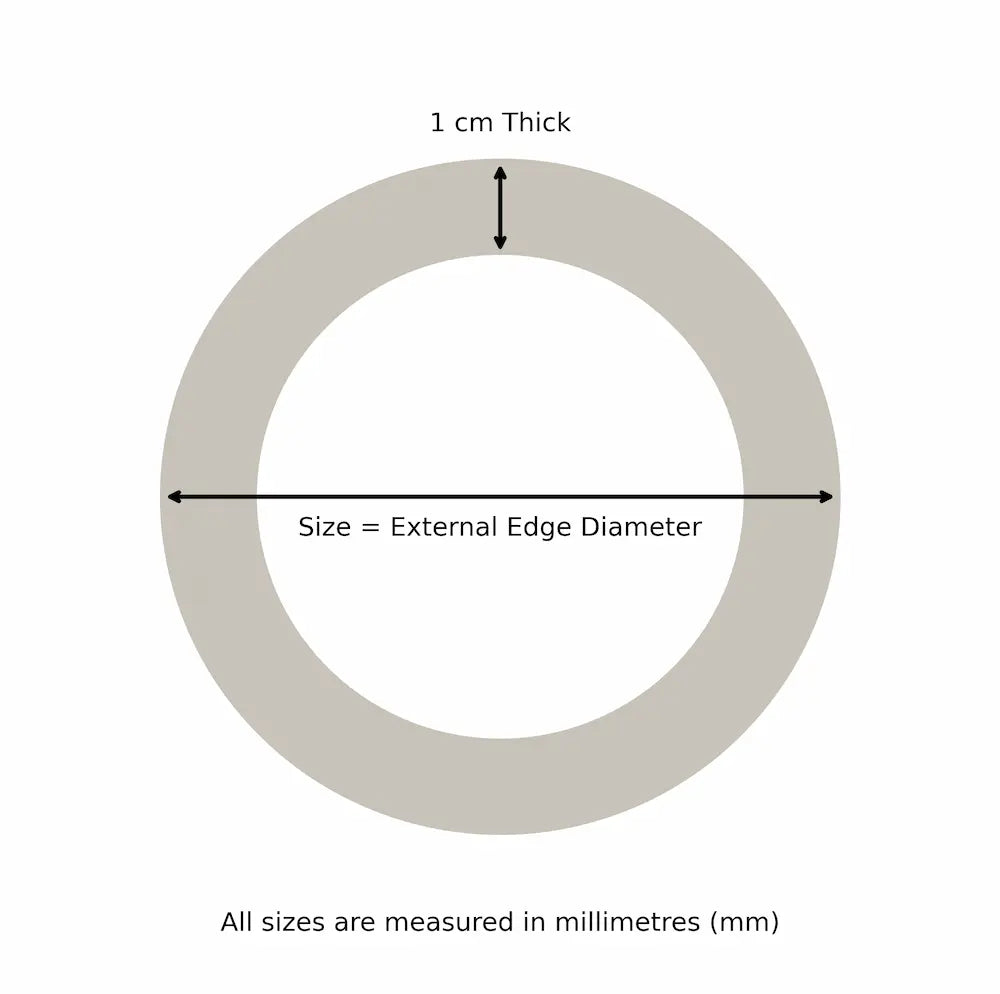
The ring pessary is the most commonly prescribed type and suits most cases of mild to moderate prolapse. It works by sitting behind the pubic bone and supporting the vaginal walls. Sizes are measured by external diameter in millimetres (mm) — our ring pessaries range from 51mm to 108mm to accommodate different anatomies.
It is normal to try more than one size before finding the best fit. A well-fitted pessary should feel comfortable at rest, during movement, and when passing urine, without falling out or causing pressure.
What is the difference between Firm Silicone Ring Pessary and the Standard Silicone Ring Pessary?
Standard Ring Pessary
- Softer, more flexible silicone
- Gentler on surrounding tissues
- Ideal for mild prolapse
- Comfortable first-choice option
- Supports self-management
- Suitable for cystocele and uterine prolapse
Firm Ring Pessary
- Firmer, more rigid silicone
- Provides Stronger Structural support
- Suitable for moderate prolapse
- Good alternative to a PVC pessary
- Support self-management
- Suitable for cystocele and uterine prolapse
Both pessaries are made from 100% medical grade silicone and support self-management. The key difference is the level of firmness - if you are unsure which is right for you, please consult your GP, gynaecologist, or specialist continence nurse.
What are the contraindications and cautions for pessary use?
CONTRAINDICATIONS
A pessary should not be used in the following situations:
- The patient is unable to comply with regular follow-up and is not able to self-manage the pessary
- Active vaginal or pelvic infection, inflammation, or unexplained bleeding
- Ongoing vaginal or cervical cancer
- Severely atrophic vaginal tissue that has not responded to pre-pessary oestrogen treatment
- Vaginal dimensions that make fitting too difficult
- Identifiable synthetic vaginal mesh erosion
CAUTIONS
A pessary may be an option but additional caution is required when:
- Poor vaginal health - vaginal oestrogen therapy may be required prior to fitting
- Previous radiotherapy affecting the vaginal tissues
- Synthetic mesh has been placed in the vagina during previous surgery
- Pre-existing vaginal pain (e.g. pudendal neuralgia)
- The patient is immunosuppressed
Known complications
The following complications are recognised with pessary use. Vaginal changes are common but do not always mean pessary use should stop:
- Very common: increased vaginal discharge
- Common: erosion or abrasion of vaginal skin, vaginal bleeding, discomfort, pessary expulsion, new bladder or bowel symptoms
- Uncommon: vaginal ulceration, difficulty with removal, infection, incarceration
- Rare : fistula Formation
Explore other pessaries in our range


📦 Free Delivery

🔒 Discreet Packaging

📞 Need Help?
